
INTRODUCTION TO THE ENNEAGRAM
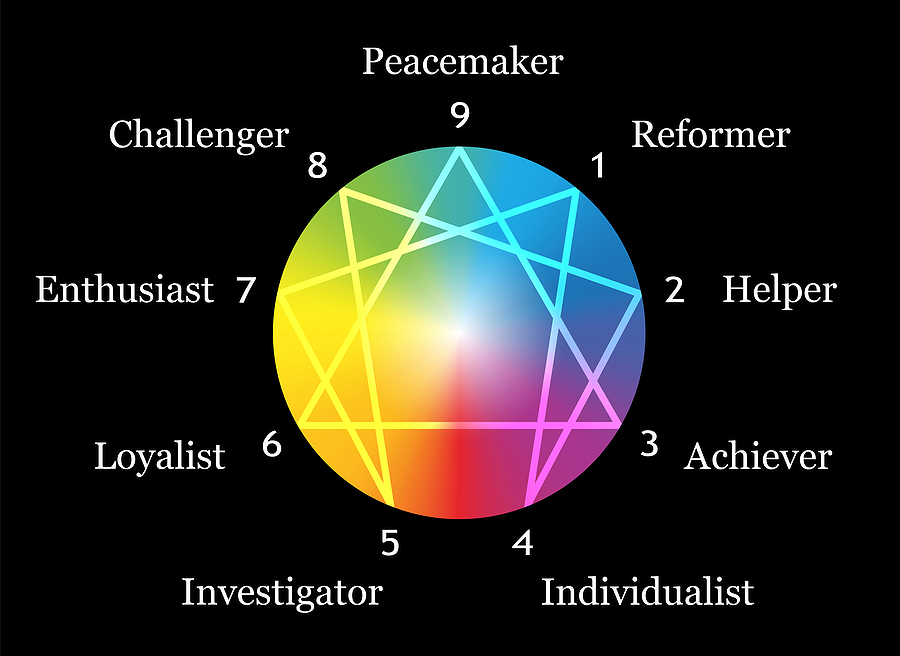
The Riso-Hudson Enneagram Names
The Enneagram is a geometric figure that maps out the nine fundamental personality types of human nature and their complex interrelationships. It is a development of modern psychology that has roots in spiritual wisdom from many different ancient traditions. The word comes from the Greek for “nine” (ennea) and “figure” (grammos); it is a nine-pointed figure. The original concepts and method of using this figure were brought forth by Don Richard Riso and Russ Hudson in the 1980’s. The psychology and counseling literature identifies it as the Riso-Hudson Enneagram
Although it embraces the spiritual essence of the human experience, it is not a spiritual path. Rather, it concerns itself with the one element that is fundamental to all spiritual paths: Self-knowledge. The Core Truth that the Enneagram conveys is that we are much more than our Personality. Beyond the limits of our personalities, each of us exist as a vast, largely unrecognized quality of Being or Presence – what we call our Essence. Our Essence cannot be harmed, damaged, or destroyed, but it can be constricted and obscured by our Personality. Our Essence is waiting for the opportunity to reveal itself. In a very true sense, we are waiting for the opportunity to become ourselves. Our spirit is yearning to break free, to express itself, to come back to life, to be in the world in the way it was meant to be.
The three basic elements needed for transformational work are:
- Presence – our awareness and mindfulness
- The Practice of Self-observation – gained from self-knowledge
- Understanding what one’s experiences mean – an accurate interpretation provided by a larger context such as a community or a spiritual system
“Being” supplies the first; “You” supply the second; the “Enneagram” supplies the third. When these three come together, things can happen quickly.
Here is a general overview of the Nine Personality Types with their associated Basic Fears, Basic Desires and Possible Distortions:
Type #1 – The Reformer: rational, principled, self-controlled;
Fear of being bad, corrupt, evil or defective
Desires to have integrity which can deteriorate into critical perfectionism
Type #2 – The Helper: caring, generous, possessive;
Fear of being unworthy or being unloved
Desires to be loved which can deteriorate into the need to be needed
Type #3 – The Achiever: adaptable, ambitious, image-conscious;
Fear of being worthless or without inherent value
Desires to be valuable which can deteriorate into chasing after success
Type #4 – The Individualist: Intuitive, aesthetic, self-absorbed;
Fear of being without identity or personal significance
Desires to be oneself which can deteriorate into self-indulgence
Type #5 – The Investigator: perceptive, innovative, detached;
Fear of being useless, incapable or incompetent
Desires to be competent which can deteriorate into useless speculation
Type #6 – The Loyalist: engaging, responsible, defensive;
Fear of being without support or guidance
Desires to be secure which can deteriorate into an attachment to beliefs
Type #7 – The Enthusiast: upbeat, accomplished, impulsive;
Fear of being deprived or trapped in pain
Desires to be happy which can deteriorate into frenetic escapism
Type #8 – The Challenger: self-confident, decisive, domineering;
Fear of being harmed or controlled by others
Desires to protect oneself which can deteriorate into constant fighting
Type #9 – The Peacemaker: receptive, reassuring, complacent;
Fear of loss of connection, of fragmentation
Desires to be at peace which can deteriorate into stubborn neglectfulness
The descriptions of the Personality Types are universal and apply equally to all genders. Expression of the attitudes, traits and tendencies can differ, but the basic issues of the type remains the same. Not everything in the description of your Personality Type will apply all the time because we fluctuate constantly between healthy and unhealthy traits. Expression also can change as we grow older. And finally, none of the Personality Types is better than the other – all have unique assets and liabilities, strengths and weaknesses, capacities and limitations.
We all have nine types within us, to some degree. This understanding may help us to develop more compassion towards others and their life journey. But first – we must go deeply into ourselves to uncover the True Essence that is uniquely ours. While knowing our Personality Type gives us good information, this information is just a starting point for a much greater journey. Summed up: Knowing our Type is not the final destination! Dig deeply to find your True Treasure – your True Essence.
Recent Comments