Crystal Creations

Several folks have asked about the different crystals we have in our Centre. There are many type of formations being sold; some more familiar than others. Let’s look at the more common formations.

Single Terminated : as the name suggests, this formation has a six-sided “point” at one end; often used in treatments to direct energy and vibration for healing. The colour and type of crystal also contributes to the effects.

Double Terminated : this formation has a six-sided point at both ends. Used as a connecting crystal, that is, to connect two areas or chakras.

Crystal Clusters : has many terminations jutting out in many directions; each termination reflects light and energy back and forth to one another, creating a strong healing and cleansing vibration. Useful to energize or cleanse a room, another crystal or to encourage group work and discussions.

Barnacle Crystal : a larger crystal having a side covered either partially or completely with small crystals, looking like barnacles on a rock. Helpful with family relations or community problems.

Rainbows: most crystals will reflect light when held to the sun, but Rainbow Crystals have special formations that reflect exquisite colourful patterns. Known as Happiness Crystals, meditating with these crystals bring comfort and joy.

Baby Within : looking within a crystal, you see a whole baby crystal in the interior; it can be growing from the sides, off a veil or seemingly suspended in the middle of the larger crystal. Known as a Manifestation Crystal .

So when you come to the Centre, be sure to notice the Crystal Creations for what they are – Mother Nature’s magnificent artwork meant for health, healing and pleasure.

Sounds and Wellbeing

Sounds and Wellbeing

Ever noticed how some sounds make us feel calm, centred and relaxed, while others seem to agitate and irritate? If we consider sound as a form of energy, it is easy to see how it can affect us. For those who are music therapists, they have many principles, rules and practices to use and follow. For those of us who are musical beginners, I turned to Ted Andrew’s book entitled Music Therapy for Non-Musicians for explanations that were easier to understand.

Andrews simplifies things into four main principles:

1. The Principle of Resonance
2. The Principle of Rhythm
3. The Principle of Pitch and Timbre
4. The Principle of Sound as Energy

Resonance is the ability for a sound vibration or frequency to reach out and trigger a response in the human body. Every cell in the body is a sound resonator. The cells that combine to make up the individual organs and the system the organs belong to have their own individual sound frequencies – ones they more easily respond to.

Rhythm is the pattern of pulses in music – rhythm is essential to music. It also reflects the pulse of life. Different rhythms affect the physiological systems and organs in various ways.

Pitch is the highness or lowness of a sound. The faster a sound vibrates, the higher the pitch. The slower the vibration, the lower the pitch. Different pitches are more likely to influence different systems and organs of the body.

Timbre is the distinct characteristic of a sound that enables us to distinguish one voice from another or one instrument from another. Like pitch, different timbres affect various organs and body systems differently.

Sound is an expression of energy and the human body is an energy system. Because of this, sound has the capability of influencing the body’s natural energy patterns. Because sound is a vibration, it has the capability of interacting with other sources of energy frequencies, such as colour, fragrance, electro-magnetics, thoughts and others.

Looking through his book, I was intrigued by the musical notes and types of music being suggested for certain health conditions and situations. For example, Andrews suggests that because the Crown Chakra influences skeletal and nervous system functions, musical tones in the keys of B or B flat (major and minor) which are said to help the Crown will, in turn help the skeletal and nervous systems. Anything that affects the Crown Chakra will also affect the Brow Chakra. The Brow Chakra is influential in balancing the hemispheres of the brain. So singing or toning in the keys of B or B flat will be helpful to balance the brain, nerves and settle any skeletal issues. It is not just “singing” or “toning”, but it is being mindful while one sings or tones that makes the sound effective for healing.

Types of music suggested to benefit the nerves includes symphonies, big band music and reggae.

Symphonies generally have three or four movements, played by a full orchestra. With so many instruments, they have great potential for influencing many aspects of the nervous system. [Pat’s note: I’ve known many people who love to listen to symphonic music and pretend they are conducting the orchestra. Talk about being one with the music!]

Big Band, especially Swing, lends itself to strengthening and repairing an overwrought nervous system [Pat’s note: Does anyone sit still when this is being played?].

Reggae, with its syncopated, soft, bouncy rhythms has a calming effect upon frayed nerves. [Pat’s note: I’ve never met anyone who didn’t smile and sway when they heard Bob Marley’s “Jammin” being played. Always feels like a vacation!].

It is interesting that our choices in music might actually be our intuitive way of performing self-care. So let the music play on!

For more information, refer to Ted Andrew’s book Music Therapy for Non-Musicians.

The Four Candles

The Four Candles

Natural Comfort - Four CandlesThere are several traditions at this time of year which have to do with Light.  From trees to mantles, altars to special candle holders, lights are used to add a festive touch and symbolize a deeper meaning to many rituals, religious holidays and festivals. One tradition is that of the Advent Candles. Although it is a Christian tradition, the meanings attributed to these candles are universal.


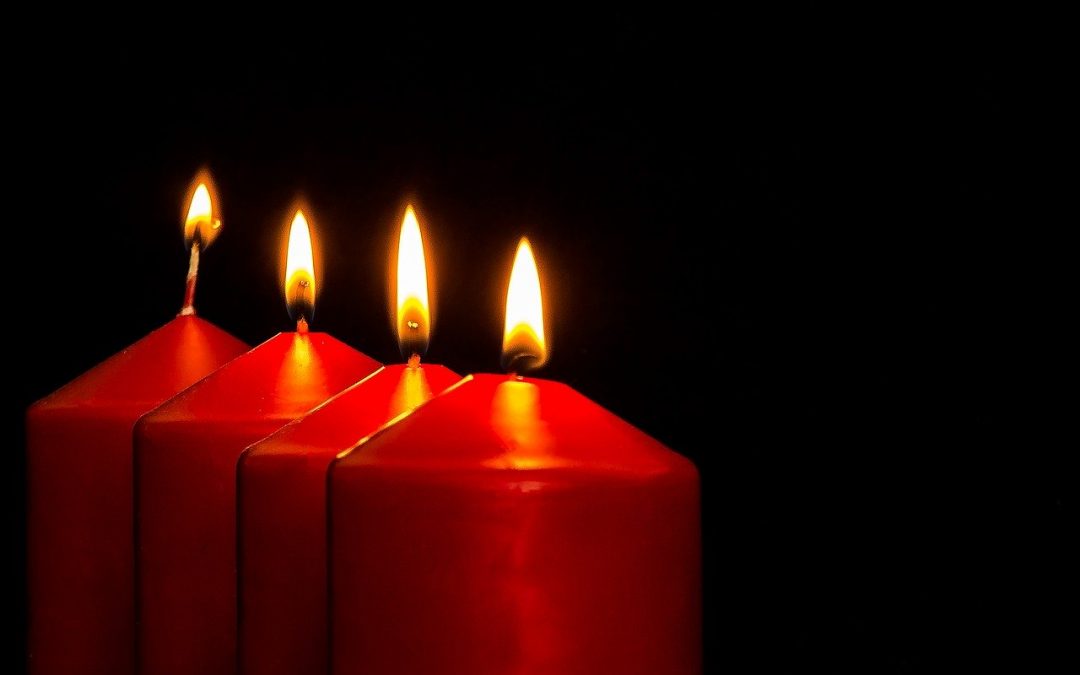
In the Advent tradition, there is a candle lit for each of the four weeks leading up to Christmas.   In some places, there is a fifth candle lit on Christmas Day itself.  Each candle has a specific meaning and it is helpful for those lighting the candles to reflect upon each meaning as Christmas approaches.  The four wishes are:  Hope, Love, Joy and Peace.   These are not concepts specific to only Christianity.  They are universal wishes shared by the masses!

If you have been in the Centre lately, you will have seen the Holiday DVD that our Beverley has created from multi-media sources .  One of the vignettes she has included is called The Four Candles (sorry but we do not know who wrote this story).   In this story, the candles have slightly different meanings to the Advent Candles, but the themes are still universal.  The story goes like this:

The Four Candles burn slowly (there is a picture of four candles burning)  The ambiance was so soft, you could hear them speak.

The first one said:  I am Peace!

“However, nobody can keep me lit.  I will go out”

Its flame rapidly diminishes and goes out completely.

The second one said:  I am Faith!

“Most of all I am no longer indispensable, it doesn’t make any sense that I stay lit any longer.”

When it finished talking, a breeze softly blew on it putting it out.

Sadly, the third candle spoke in its turn:  I am Love!

“I haven’t got the strength to stay lit.  People put me aside and don’t understand my importance.  They even forget to love those who are nearest to them.”

And waiting no longer, it goes out.

Suddenly, a child enters the room and sees three candles not burning.  “Why are you not burning?  You are supposed to stay lit till the end.”   Saying this, the child begins to cry.

Then the fourth candle said:

“Don’t be afraid, for while I am still burning we can re-light the other candles.  I am Hope.”

With shining eyes, the child took the candle of Hope and lit the other candles.

May the Flame of Hope never go out for you!

The Aroma-Memory Phenomenon

The Aroma-Memory Phenomenon

Seeing as next Tuesday is Remembrance Day, it is a perfect time to reflect upon how aromas can increase access to unconscious thoughts, feelings and memories. When people inhale aromas, they have an immediate reaction to the scent. Sometimes it is a body sensation, image, thought, sound or emotion. How can aromas create so many different reactions? The answer lies in our Limbic System.

The Limbic System is a unique structure in the human brain. It connects several areas in the brain responsible for the recognition and processing of emotions, thoughts, human drives and wants (yes, that includes sex), creative abilities, learning and memories.   And aroma has a direct connection to the Limbic System through the olfactory bulb in the brain. Olfaction means smell, so when we inhale an aroma, the aroma molecules first enter the brain at the olfactory bulb for processing. These molecules are then sent as a bio-electrical impulse to the Limbic System.   And from there, they can immediately affect and influence any of the areas of the brain which are connected via the Limbic System.

This is why some people have several reactions to certain smells. For instance, Rose may remind them of an auntie who used Yardley’s Old Roses soaps and powders. They can see her in their mind’s eye and “smell” her. Depending upon their relationship, this memory may bring comfort or discomfort! Some churches use Frankincense and this aroma may remind the person of a funeral or some other religious occasion. They see the funeral proceedings in their mind’s eye and recall how they felt being there. Depending upon their relationship with the deceased or others at the event, the aroma may bring a sense of peace or unsettledness. Most citrus aromas are associated with fun, candies and good times!

With one whiff of an essential oil, you can be transported to a world of fantasy, folklore or familiar times and places. This “escape” can provide you with a moment to relax and recharge. This is why so many people enjoy an aromatherapy massage. Not only do you get the benefit of the massage itself, but your unique blend of essential oils can transcend your daily worries, aches and pains or sense of overwhelming responsibility. Not forever, but just long enough for you to re-set your stress meter and take on the world again!

Smudging Zone

Smudging Zone

Smudging is the common name given to the Sacred Bowl Blessing .  It is a term used to describe the use of smoke for practical and ritual activities. The practice of using smoke to cleanse, purify and bless is found in many cultures around the world.  Smoke was said to take our prayers, concerns and requests to god. It was used to cleanse the sick rooms and the patients. It keeps bugs away (unless it’s the Manitoba Mosquito).  The act of smudging can be as basic or elaborate an activity as you wish.  It is the intent with which you smudge that is most important.

There are several plants that can be used for smudging.  Here are a few that are commonly used.

  • Sagebrush – used to transform energy and create change
  • Common Sage – to bring wisdom and healing
  • Sweetgrass – attracts positive energy
  • Cedar – deeply purifying; a great healer; clears negative emotions
  • Juniper – purify and create a safe and sacred space
  • Yerba Santa – purifies;  set and protect boundaries
  • Rosemary – powerful healer that brings clarity
  • Lavender – restores balance;  creates a peaceful atmosphere; attracts loving energy and spirits

Some people find the smoke too strong or irritating.  You could always use the plant’s essential oil to make a smokeless smudge either by placing the oil on smelling sticks, in a diffuser or making a spray with it. There is a wonderful Sweetgrass hydrosol spray from Alberta that can be used, too.  Or you could use the fresh plant material from your garden.

The New Year is a great time to think about clearing out the old and bringing in the new to create a healthy, healing environment.  Smudging is a great way to accomplish this task.